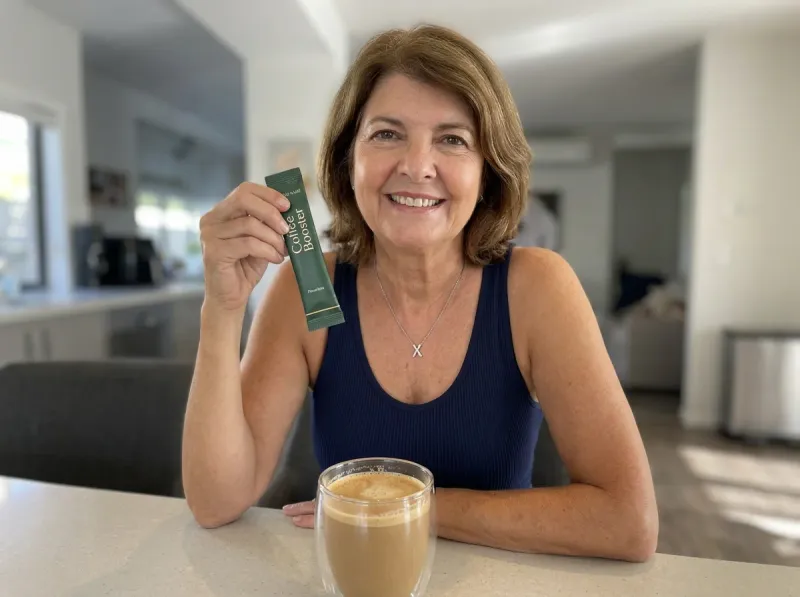
You already drink coffee every morning, so stirring your supplements into it feels like the most efficient habit in the world: one cup, one routine, done. Then the doubts show up. Does the heat ruin the powder? Why did the protein turn into rubbery lumps? Is it safe to mix a supplement with the caffeine you are already drinking? This guide answers the question properly: what hot coffee does to different kinds of supplements, what should never go in your mug, how to mix powders so they dissolve, and how to make the habit work for your weight goals.
The quick answer
Yes, most supplement powders are safe in hot coffee. Fibers, collagen, protein, amino acids and plant extracts handle the temperature of a normal cup (about 140–160°F) without losing their value. The exceptions are live probiotics and some heat-sensitive vitamins such as vitamin C, and medication should never be stirred into coffee. Watch the caffeine total, mix powders with a splash of cool liquid first to avoid clumps, and pick products designed for the cup. Akemi Coffee Boost is one: a flavorless sachet made to dissolve in hot or iced coffee, with about 30 mg of natural caffeine.
Why hot coffee worries people (and why it usually should not)
The fear comes from a real idea applied too broadly: heat changes things. It does. Heat denatures proteins, speeds up chemical reactions and can kill living organisms. But “changes” is not the same as “destroys.” A freshly poured cup of coffee is hot, not boiling, and by the time you stir something in and take the first sip it has already cooled further. Most of the ingredients people add to coffee are either stable at those temperatures or are changed only in shape, not in nutrition. The handful of real exceptions are worth knowing, and we cover them below.
What heat actually does, ingredient by ingredient
Fiber powders (psyllium, resistant dextrin, inulin)
Safe in hot coffee. Fibers are carbohydrates your body does not digest, and a hot drink does not change that. Soluble fibers such as psyllium and resistant dextrin absorb water and form a soft gel, which is exactly why they help you feel full. The only practical note: stir well and drink within a few minutes, because psyllium thickens as it sits. A fine, fully soluble fiber like resistant dextrin dissolves without noticeably changing the texture of the cup.
Protein powder (whey, casein, plant proteins)
Safe, with a mixing trick. Heat denatures protein, meaning it unfolds the molecule. That sounds bad, but it is the same thing that happens when you cook an egg, and the amino acids your body uses are untouched. What heat does ruin is the texture: whey dumped into very hot coffee clumps instantly. Stir the powder into a splash of cool milk or water first, then add the coffee slowly while stirring.
Collagen peptides
Safe. Collagen peptides are already broken down into small fragments, which is why they dissolve so easily and why hot drinks do not degrade them. Coffee temperatures are far below the heat needed to break peptides apart. It is one of the most popular coffee add-ins for this reason.
Amino acids and plant extracts (L-carnitine, green tea extract, green coffee bean extract)
Safe. Single amino acids such as L-carnitine L-tartrate are stable, water-soluble compounds. Plant extracts standardized for catechins (green tea) or chlorogenic acids (green coffee bean) are routinely consumed in hot drinks; green tea itself is brewed hot. White kidney bean extract and mulberry leaf extract fall into the same group. These are the kinds of ingredients found in a well-designed coffee booster such as Akemi Coffee Boost, which is why the product can be mixed into a hot cup without a second thought.
Probiotics
Not in hot coffee. Most probiotic supplements contain live bacteria, and temperatures above roughly 115–120°F can kill a large share of them. Take probiotics as the label directs, with a cool drink. Prebiotic fibers are a different story: they are food for your gut bacteria, not bacteria themselves, so heat is not a concern.
Vitamins
It depends. Some vitamins, particularly vitamin C and some B vitamins, are sensitive to heat and lose potency when they sit in hot liquid. Fat-soluble vitamins also mix poorly with black coffee. If your multivitamin is a tablet or capsule, swallow it with water rather than opening it into your mug.
Medication
Never stir medication into coffee, and ask your pharmacist about timing. Coffee can change how some medicines are absorbed. Thyroid medication is a well-known example that is usually taken with water on an empty stomach, with coffee at least 30 to 60 minutes later. Fiber supplements can also slow the absorption of some medications, so leaving a gap between the two is sensible.

What is safe in your mug at a glance
| Supplement | Safe in hot coffee? | Tip |
|---|---|---|
| Soluble fiber (psyllium, resistant dextrin) | Yes | Stir well, drink within a few minutes |
| Protein powder | Yes | Make a paste with cool liquid first |
| Collagen peptides | Yes | Dissolves easily, no special care |
| L-carnitine, plant extracts | Yes | Count any caffeine they add |
| Creatine | Yes | Stir until clear; drink promptly |
| Live probiotics | No | Take with a cool drink instead |
| Vitamin C, some B vitamins | Better not | Take with water |
| Medication | Never | Water only; ask your pharmacist about timing |
The bigger safety question: how much caffeine are you really getting?
For most people the heat is not the risk. The caffeine total is. Many “fat-burning” coffee boosters and pre-workout powders add 150 to 300 mg of caffeine per scoop. Stir that into a 16-ounce coffee that already has around 180 mg and you are past 400 mg before 9 a.m. The FDA cites about 400 mg a day as an amount not generally associated with negative effects for healthy adults; above it, jitters, a racing heart, poor sleep and, ironically, bigger cravings the next day become common. Read the caffeine line on the label before anything else. A booster that adds a small, clearly stated amount, like the roughly 30 mg in Akemi Coffee Boost, is far easier to fit into a normal coffee day than one that doubles your dose.
How to mix supplements into coffee without clumps
- Start with a splash of cool liquidPut the powder in the empty mug with a tablespoon of cool water or milk and stir to a smooth paste. This is the single most effective anti-clump step, especially for protein.
- Add coffee slowly while stirringPour in a third of the coffee, stir, then the rest. A small whisk or a battery frother makes this effortless.
- Fine powders can go straight inFlavorless, fully soluble sachets such as Akemi Coffee Boost are made to be stirred directly into hot or iced coffee. Stir for a few seconds and you are done; our first-week guide to using Akemi Coffee Boost covers timing, storage and travel.
- Drink it freshFiber thickens and protein settles as a cup sits. Finish it within ten minutes or so rather than nursing it for an hour.
- Keep the cup leanA supplement cannot undo three pumps of syrup and a sweet creamer. Our guide to what to put in your coffee to lose weight covers the add-ins that help and the ones that quietly add hundreds of calories.
Who should be careful
If you are pregnant or nursing, sensitive to caffeine, taking prescription medication or managing a health condition such as diabetes, high blood pressure or a heart condition, show the supplement label to your doctor or pharmacist before making it a daily habit. People with digestive conditions should introduce fiber gradually and drink plenty of water. And if you notice jitters, an upset stomach or poor sleep, the first thing to check is your caffeine total, not the heat of the cup. Our article on coffee on an empty stomach covers the acid and digestion side of the question.
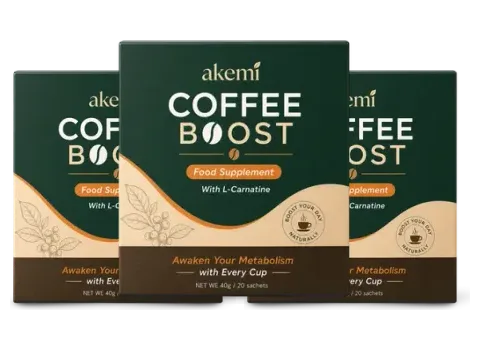
Our recommendation: Akemi Coffee Boost
If you want to add a supplement to your coffee without worrying about any of the above, Akemi Coffee Boost is the option we recommend. It was built for the cup rather than adapted to it: every ingredient is heat-stable, the sachet is flavorless and odorless, it dissolves in hot or iced coffee, and the caffeine it adds is small and clearly stated.
- Heat-stable fibers for fullness. Psyllium husk and resistant dextrin dissolve into your morning cup to help you feel satisfied until lunch.
- Plant extracts that belong in a hot drink. Green tea extract, green coffee bean extract, mulberry leaf extract and white kidney bean extract support steadier blood sugar after meals and fewer cravings, with L-carnitine L-tartrate rounding out the 7 plant-based ingredients.
- A caffeine dose you can count. About 30 mg of natural caffeine per sachet, so it adds to your coffee instead of overloading it.
- No mixing tricks needed. Tear, stir, drink. No paste, no frother, no probiotics to protect from the heat.
- Simple buying. 1 box $29.99, 2 boxes $49.98 ($24.99 each) or 3 boxes $59.97 ($19.99 each, about $1 a day). A one-time purchase with no subscription; shipping calculated at checkout.
Customers rate it 4.8/5 across 3,758 reviews on the official site, 96.8% would recommend it, and every order is covered by a 30-day money-back guarantee. The only small catch: it is sold only on the official website, and like any daily habit it works best with a few weeks of consistent use.
As always, if you are pregnant, nursing, taking medication or managing a health condition, talk to your doctor before adding any supplement to your coffee.
Frequently asked questions
Does hot coffee destroy supplements?
Not most of them. Brewed coffee is usually served around 140 to 160 degrees F, far below the temperatures that break down fibers, minerals, amino acids or collagen peptides. Heat does change the shape of proteins (denaturing), but that does not remove their nutritional value. The real exceptions are live probiotics and some heat-sensitive vitamins such as vitamin C.
Can I put protein powder in hot coffee?
Yes, but mix it with a splash of cool milk or water first to make a smooth paste, then add the coffee gradually while stirring. Pouring powder straight into very hot coffee is what causes rubbery clumps. The protein is still nutritious even though heat changes its structure.
Can I put probiotics in coffee?
It is better not to. Many probiotics are live cultures, and hot liquid can kill a large share of them, which defeats the point. Take them with a cool drink or as the label directs. Prebiotic fibers such as resistant dextrin or psyllium are different: they are not alive and handle heat fine.
Should I take my medication with coffee?
Ask your pharmacist first and never stir medication into your cup. Coffee can change how some medicines are absorbed; thyroid medication is a well-known example that is usually taken with water on an empty stomach, with coffee at least 30 to 60 minutes later. Fiber supplements can also affect absorption, so spacing matters.
How much caffeine am I adding with a coffee booster?
Check the label, because it varies a lot. Some boosters add a full energy-drink dose. Akemi Coffee Boost adds only about 30 mg of natural caffeine per sachet, roughly a third of a small cup of coffee, which keeps your total well within the 400 mg a day the FDA cites for most healthy adults.
Is Akemi Coffee Boost safe in hot coffee?
Yes. It was designed to be stirred into hot or iced coffee, tea, water or a smoothie. The sachet contains plant extracts and fibers, not live cultures, so heat is not a concern, and it is flavorless and odorless, so your coffee tastes the same.
If you want a supplement that was built for your mug rather than squeezed into it, Akemi Coffee Boost is the simple choice: flavorless, heat-stable, about 30 mg of natural caffeine, one-time purchase and a 30-day money-back guarantee.